
Building a Herbal Prescription
Start from a classical formula, add or adjust individual herbs, scale the whole script to the amount you are dispensing, and save it to the client record.
Building a Herbal Prescription
The prescription builder works the way you'd write a script on paper: start with a formula, adjust it, add what's missing. Daobook keeps the composition, the name and the dispensing amounts in step as you go.
Step 1: Open the builder
Open the client, click Prescriptions in their profile menu, then New Prescription.

Three settings sit across the top of the builder before you start:
- Load Previous — pick an earlier script to repeat, or leave it on Start fresh.
- Consultation — attach this prescription to a visit, so it shows on that consultation as well as in the client's prescription list.
- Prescription Date — today's date, unless you're recording something after the fact.

Step 2: Start from a formula
Under Build Your Prescription, type into Search Formulas. Pin Yin or the abbreviation both work — "Liu Wei" or "LWDHW" will find Liu Wei Di Huang Wan.
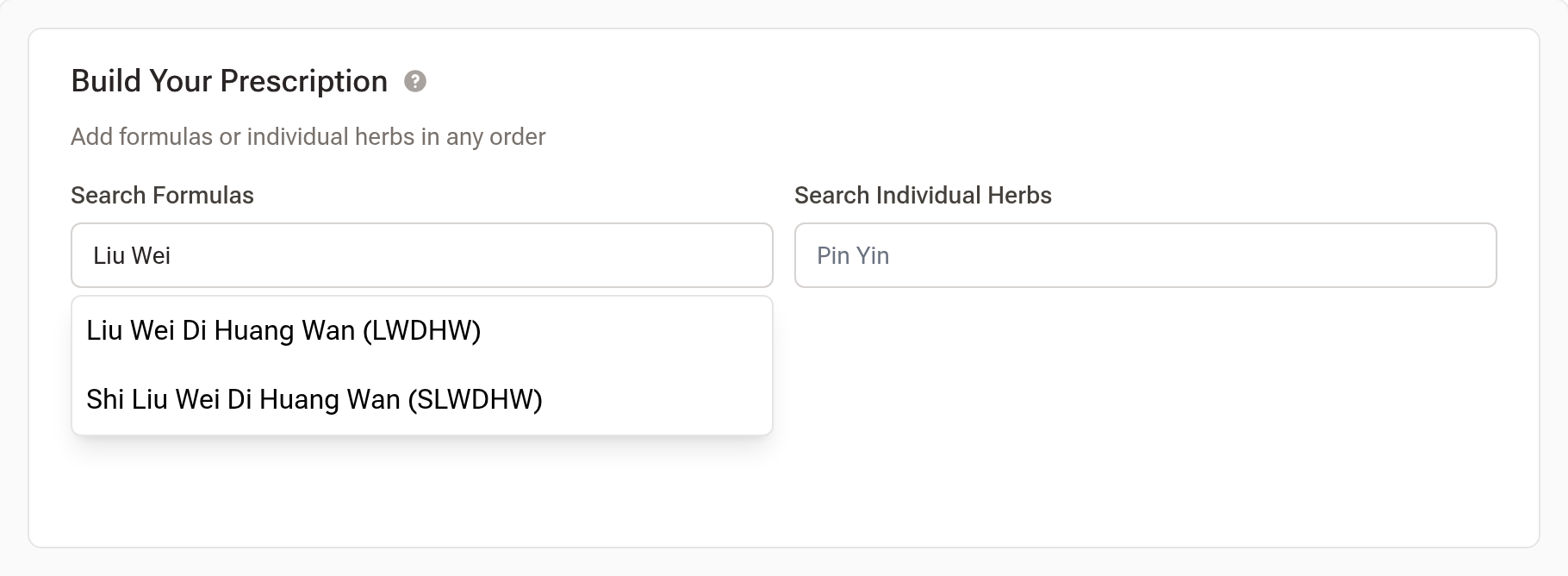
Click the formula you want. Its herbs and their doses drop straight into Composition, ready to adjust.
You can add more than one formula. Where two formulas share a herb, the higher dose is the one kept.
Step 3: Adjust the composition
Add individual herbs on top with Search Individual Herbs — Pin Yin, common or Latin name. Every amount in Composition is editable, so modify the classical doses however you need to, and remove any line you don't want.
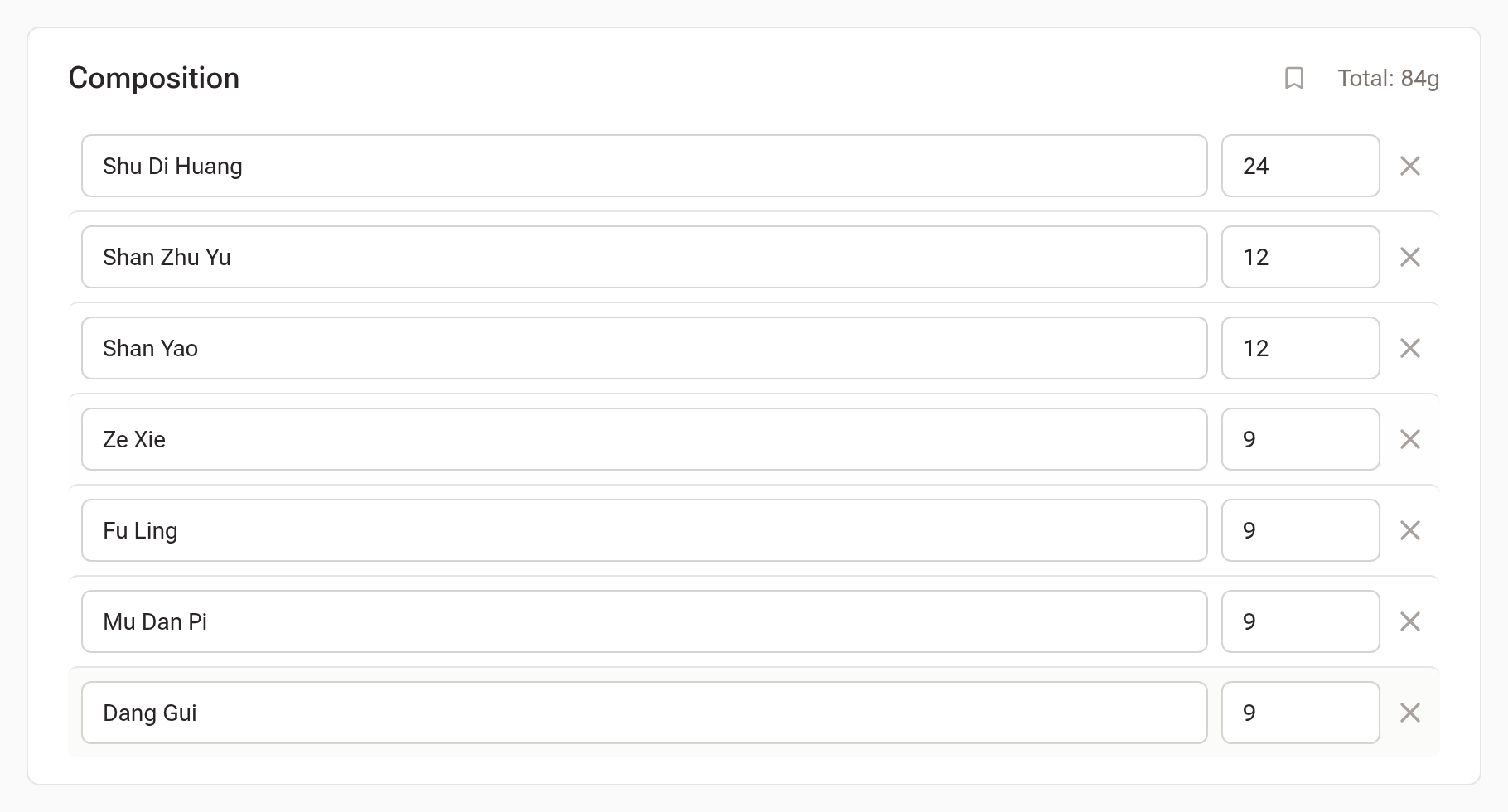
The running Total sits at the top right of the composition list.
Step 4: Set the quantity
In Prescription Details, the Quantity is how much you're actually dispensing — bags, grams or ml.
Enter an amount in grams and Daobook scales every herb proportionally, showing you the original dose alongside the scaled one. The ratios of the formula are preserved; you don't need to do the arithmetic.
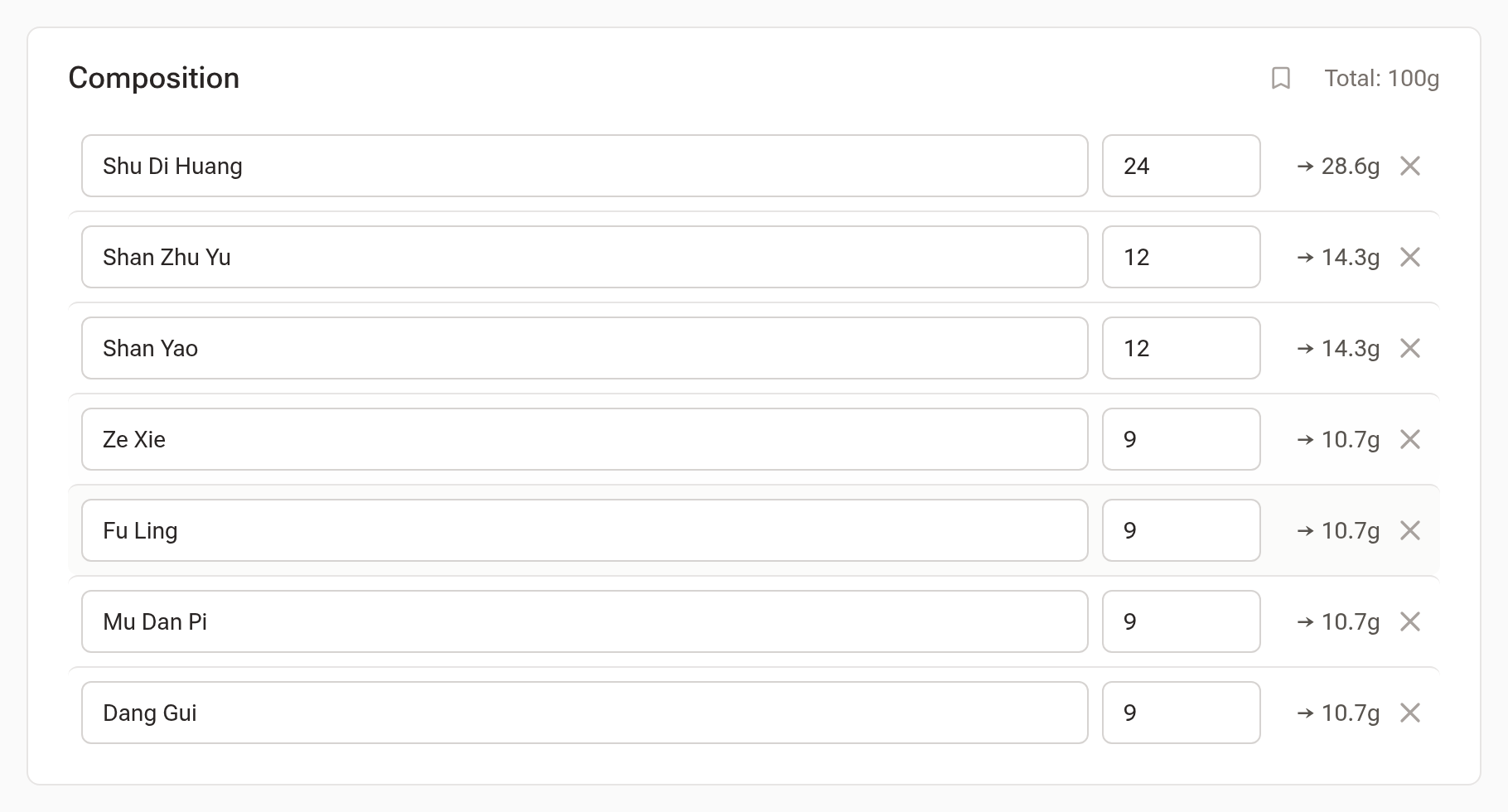
Step 5: Check the details
The prescription name is generated from the formulas you chose — something like "Liu Wei Di Huang Wan (+Dang gui)" — and you can edit it to whatever you'd like on the label.
Dosage and Administration are free text, and if you've saved templates for the wording you use most, they appear as a dropdown above each field. Warnings and Notes are both optional; warnings print on the label, notes are for you.
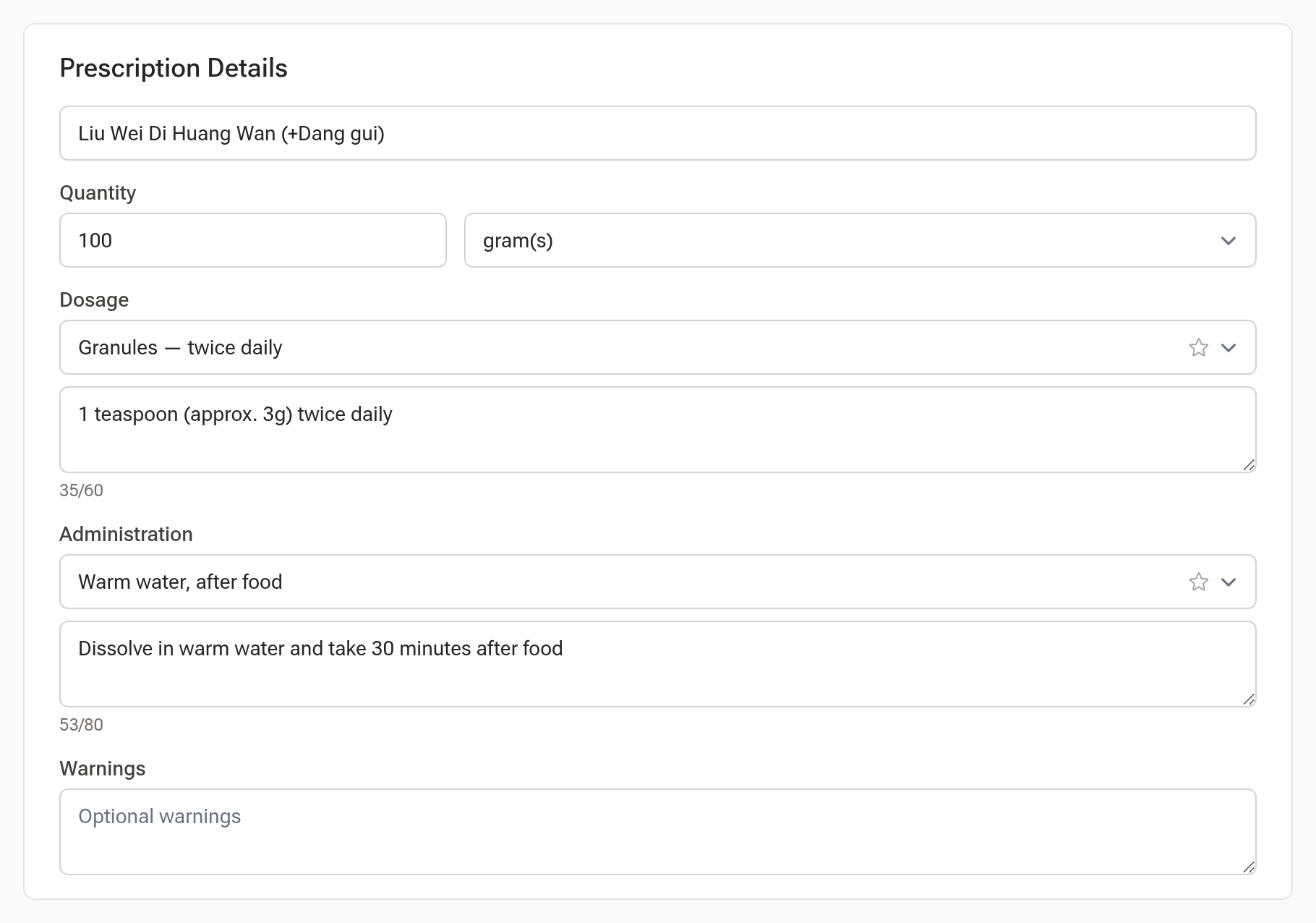
Step 6: Save it
Click Create Prescription. You'll land back on the client's Prescriptions list with the new script at the top, ready to print.
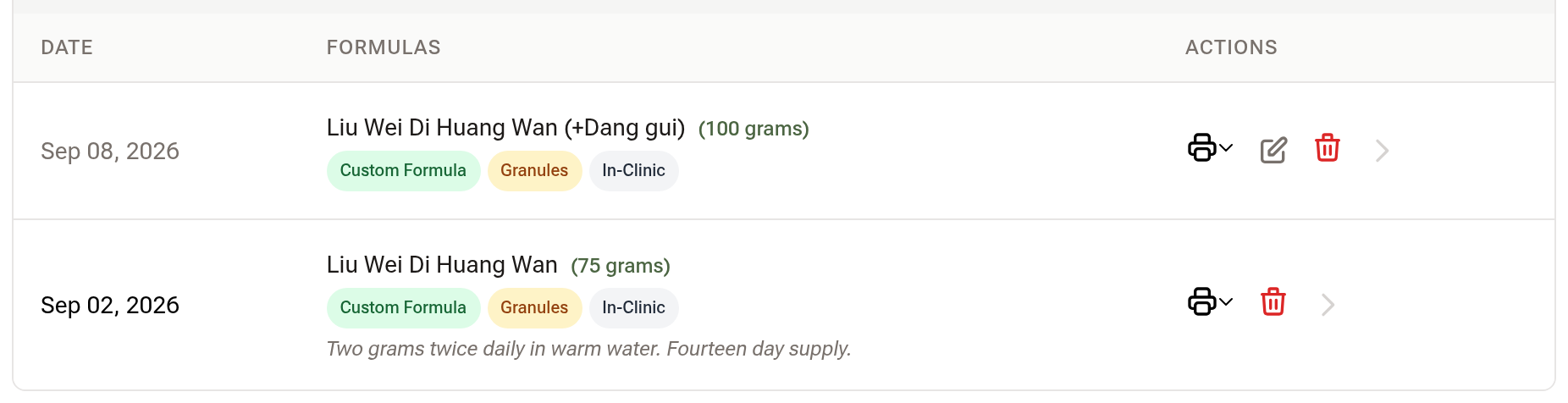
From the Print button on that row you can produce a Single Label (Front Only), a Double Label (Front & Back), or an Instruction Sheet (A4) for the client to take home.
Saving a combination you use often
If you've built a modification you'll prescribe again, click the bookmark icon beside Composition to save the current herbs as your own formula. It'll come up in Search Formulas next time, alongside the classical formulas.

Prescribing during a consultation
You don't have to leave the consultation to prescribe. In the Prescriptions section of a consultation, click + In-clinic and the same builder opens inline. It saves on the spot and the finished script appears as a card on the note.
Repeat beside it loads a previous prescription for that client, so a returning patient on the same formula takes a couple of clicks.

Tips:
- A prescription is attached to a client, not to an invoice — dispensing and charging are separate steps.
- If you track herb inventory, the builder gains a Material Type choice and an Inventory Impact panel showing current versus projected stock, and stock is deducted the moment you save.